Drain Field Repair and Replacement

  • Same-Day Service
  • Open 24/7
  • No Credit Card Fees
  • Voted Oxford's 2026 Best Plumbers, Heating & Air, Contractors & Biz Owner
Happy Pipes Mascot with Best of Oxford

What it usually is

On a regular septic system, the tank holds the solids and the drain field (you may know it as field lines or an absorption field) lets the liquid soak into the ground. When the field cannot take water anymore, that water has two places to go: up into the yard or back toward the house.

Around here a failing field usually comes down to tree roots in the lines, heavy clay that never drained well, a tank that went too long without pumping and sent solids into the field, or simply decades of use.

Signs your drain field is struggling

  • Wet, soggy spots or standing water in the yard, often over the field lines or near the tank.
  • A sewage smell outside, especially in one part of the yard.
  • Stripes of grass greener than the rest of the lawn, running in lines.
  • Slow drains or gurgling all through the house, not just one fixture.
  • A tank that was pumped and filled right back up, or backups that come back after pumping.

How we tell if it's the field

A backup does not mean the field has failed. A clogged main line, a broken tee at the tank, or a tank that just needs pumping can look the same from inside, so we check those first. We locate the tank, open it from the top, look at the inlet, outlet and water level, and walk and probe the field area for wet ground and smell.

The clearest test happens during a pump-out. As the tank is drawn down, we watch the outlet side. If effluent pours back into the tank from the field as the level drops, the field is giving back water it cannot absorb, and we know in about ten minutes. If nothing comes back, the field is still taking water. Either way, we show you what we saw.

What the repair involves

Sometimes the fix is small: a broken line, a root-filled pipe between the tank and the field, or a tank that needed pumping and a better maintenance plan. When the field itself is done, the choices are a new field, or a change to an aerobic treatment plant that sends cleaner water out by spray or overland discharge instead of into the soil. In heavy clay, on a tight lot, or where a new field will not fit, a treatment plant is often the better answer.

Every option comes on a guaranteed proposal, so you can see the choices side by side before any digging begins. We also come back for the dirt work once a few rains have settled the ground.

The Mississippi State Department of Health sets where a field can go. Its design standard keeps a disposal field at least 100 feet from any well or drinking water source, 10 feet from trees and property lines and 5 feet from the house, downhill from the well, and out from under driveways and parking. It also calls for room for a future repair area, 50 percent bigger than the system itself. A new permit is needed when the treatment type, the discharge or the size changes, or when the tank and the field are both replaced.

Drain field calls we've run in North Mississippi

Real jobs from our own records. Towns only; no names or addresses.

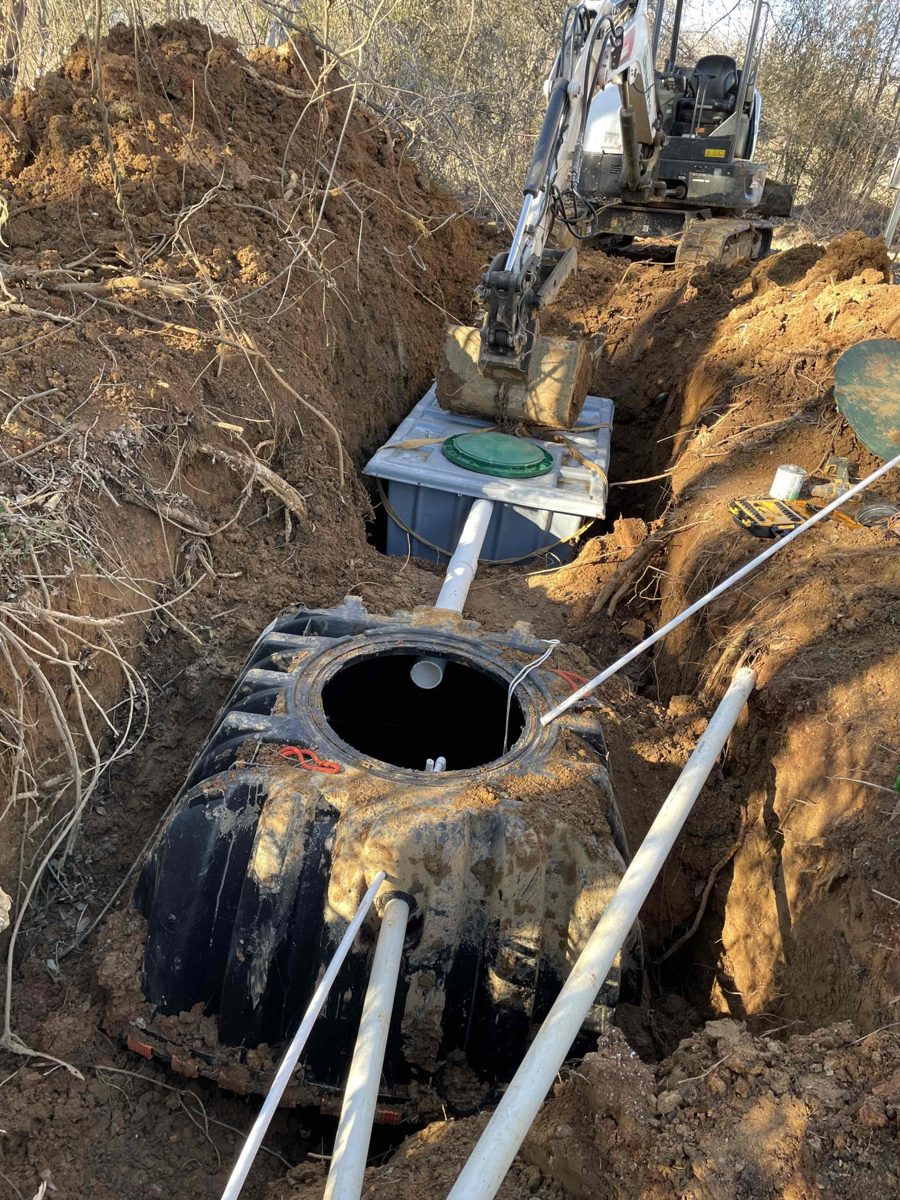
New treatment plant tank set in the ground with a spray tank behind it, at a church in Oxford

Clogged toilets at a church, and roots in the field

Oxford · Septic

A church in Oxford called about clogged toilets. We pumped the septic tank, which sat 6 to 7 feet deep.

Pumping showed the bigger concern: roots had grown into the field lines and they had failed, and the inlet by the building needed repair too. A tank that deep made any fix a big dig.

The church chose our guaranteed proposal for a new system: a SludgeHammer unit in the old tank, a new treatment plant with a 400 gallon spray tank, and new drain pipe. Our crew installed it that January.

A few weeks later water bubbled up over the sewer line behind the gym. We jetted it, ran a camera, found it broken at both fittings, dug it up and repaired it. That closed out the job.
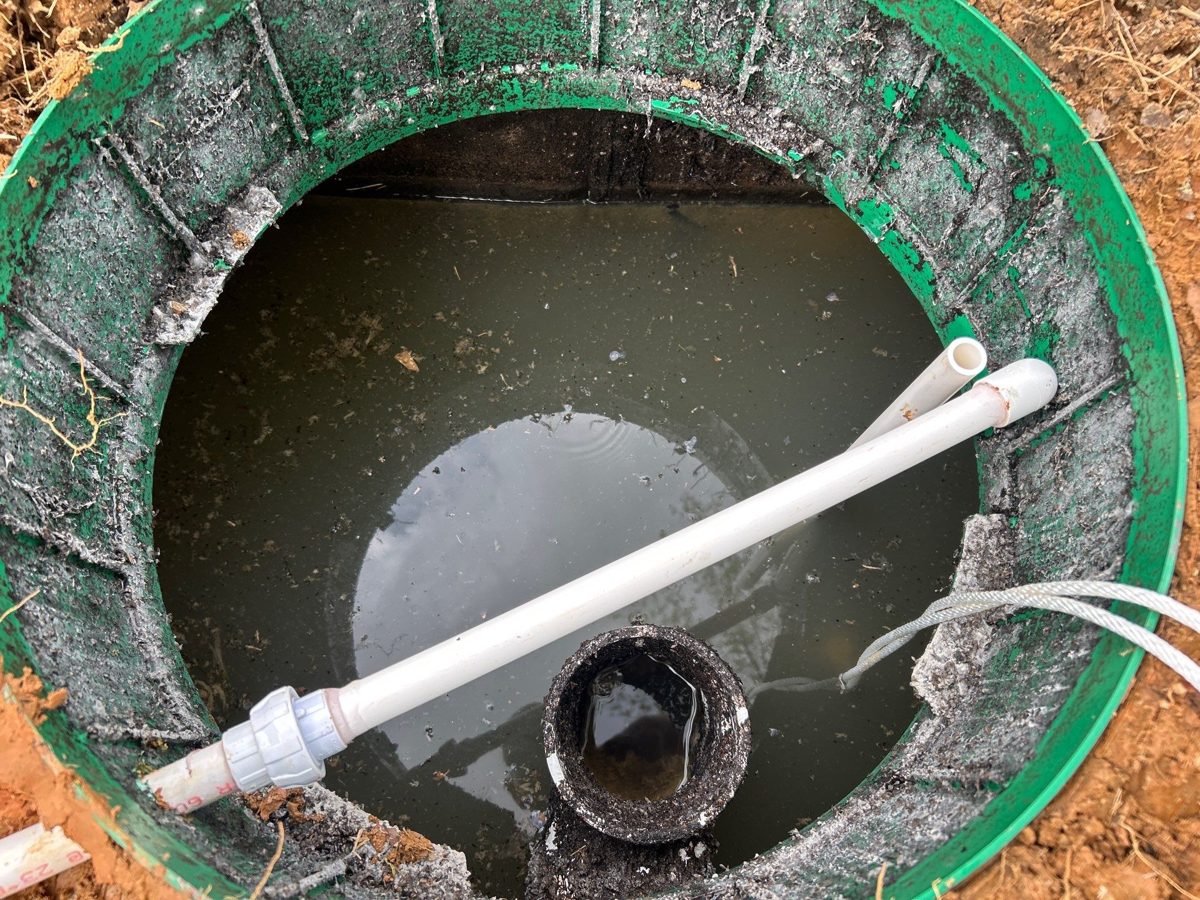
Opened septic tank with a white air line running into it, in Bruce

Sewage running into the woods

Bruce · Septic

A homeowner in Bruce had field lines going bad, with raw sewage running out into the woods. He called about putting a treatment plant in behind his septic tank.

The tricky part was picking the right fix. Our technician walked him through the options, from a new fiberglass treatment plant to a SludgeHammer unit, which feeds air to the existing tank. That helps break down the black slime, called biomat, that usually clogs a struggling field.

He chose the SludgeHammer and signed the guaranteed proposal that day.

Two days later our crew installed a SludgeHammer S46 in his tank and pumped the tank out so the system started fresh. The fix went into the tank, with no new field lines dug.

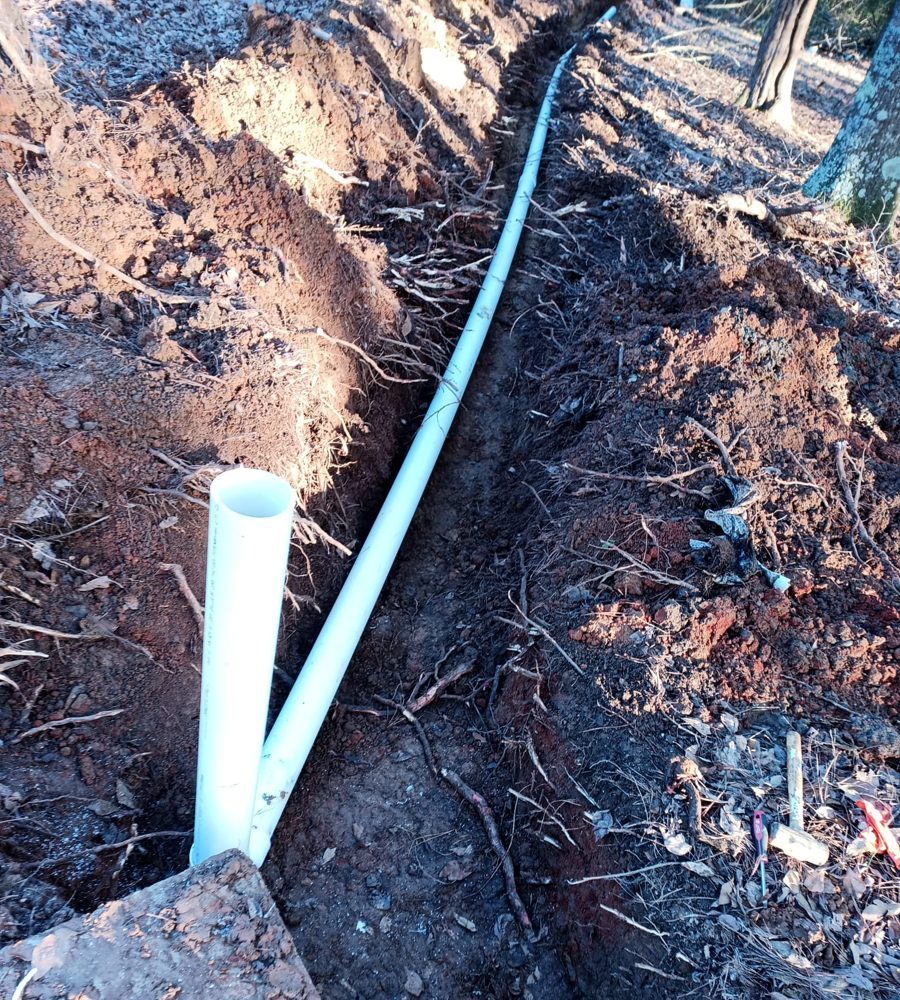
New white PVC discharge line laid in a trench through the woods, in Water Valley

Told the field had failed, but it was one pipe

Water Valley · Septic

Another company pumped a tank in Water Valley and told the homeowner the field lines were failing. They sent the homeowner to us for options, and a SludgeHammer unit was on the table.

What made it tricky is that the system was a treatment plant, and when water stops getting away from a plant, the yard can look a lot like a failing field.

Our technician found the real cause in the plant's discharge line, the pipe that carries the treated water away. It was packed with roots. He wrote a guaranteed proposal to replace the line, and the homeowner approved it on the spot.

The next day we laid a new run of 3 inch PVC discharge line. Instead of a new field or a new system, the fix was one pipe.

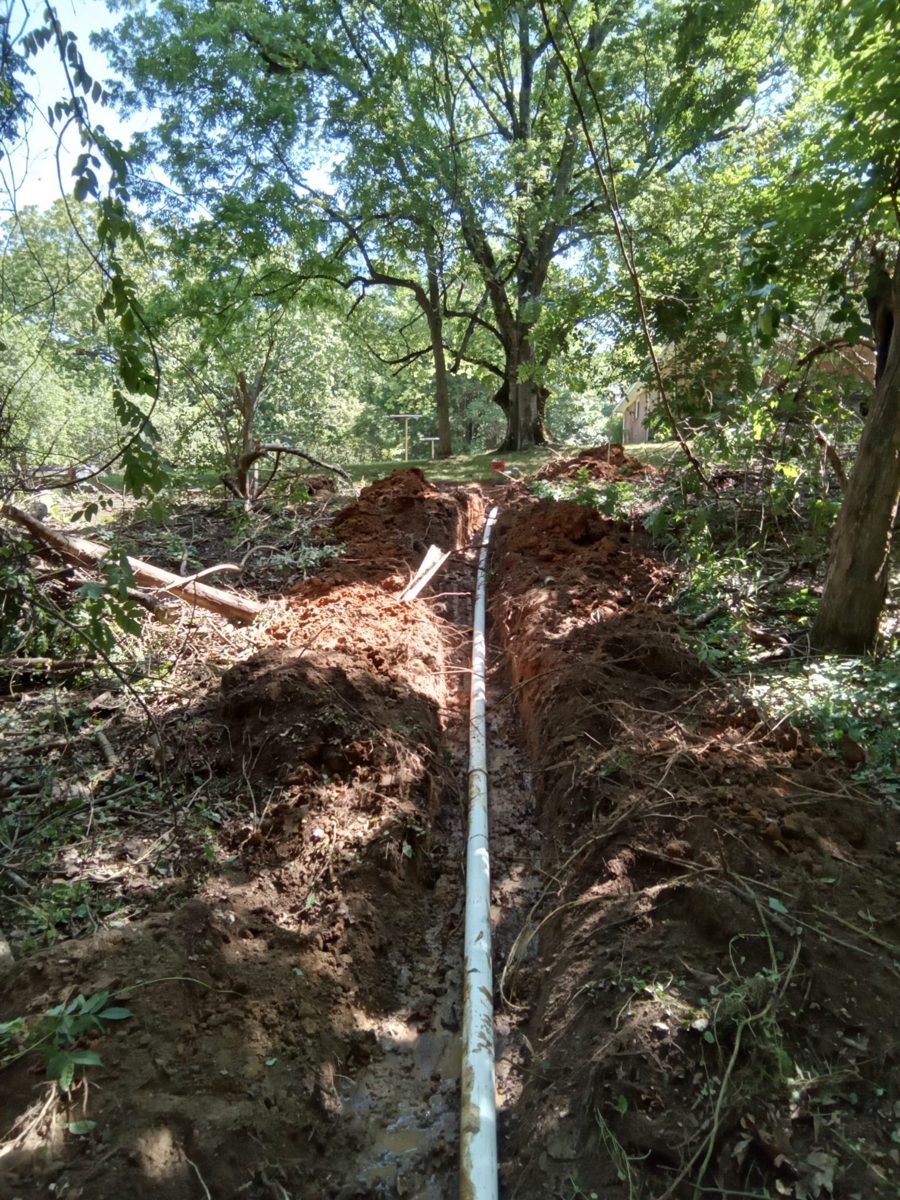
New white PVC pipe laid in an open trench during a field line repair, in Abbeville

Roots in the field lines, fixed without a new system

Abbeville · Septic

A homeowner in Abbeville thought roots had gotten into his field lines, and asked us to try jetting them or find another way.

Roots are usually the hard part. Jetting can cut them back for a while, but where roots have broken into a line, the pipe itself often needs replacing.

Our technician confirmed the field lines were in bad shape, and talked through the choices with him, from a whole new system to repairs.

He went with the repair. A week later our crew dug out the damaged run and laid new PVC pipe in its place, a point repair on the field lines. That finished it without replacing the whole system.

If it's not this

Frequently Asked Questions

How do I know if my drain field is failing?

Wet or soggy ground over the field, a sewage smell in the yard, slow drains through the whole house, and a tank that fills right back up after pumping are the usual signs. The surest check is watching the tank outlet while it is pumped: water pouring back from the field means it is not absorbing.

Can a drain field be repaired, or does it have to be replaced?

It depends on what failed. A broken or root-filled line can often be repaired. When the soil in the field itself will not take water anymore, it usually needs a new field or a change to a treatment plant.

Will pumping the tank fix a wet yard?

Pumping gives a failing field a short break and is part of how we test it. If the field is done, the wet spots and backups usually come back.

What is the alternative to new field lines?

An aerobic treatment plant cleans the water so it can be sent out by sprinklers or overland discharge instead of soaking into the soil. In heavy clay or on a small lot, it is often the better choice. See aerobic treatment plant service.

Can I drive or park over my drain field?

Please do not. Vehicles crush lines and pack the soil so it drains even worse.

Contact Us

SMS Service Consent
SMS Marketing Consent

Talk to a real person, 24/7

Call 662-362-7745 or send the form. Every job starts with a guaranteed proposal before any work begins.