Grease Trap Pumping and Cleaning

  • Same-Day Service
  • Open 24/7
  • No Credit Card Fees
  • Voted Oxford's 2026 Best Plumbers, Heating & Air, Contractors & Biz Owner
Happy Pipes Mascot with Best of Oxford

A full grease trap usually tells you before it fails

Every kitchen that cooks sends fat, oil and food scraps down the drain. A grease trap catches them before they reach the sewer line or the septic tank. It works well right up until it is full, and then the grease goes where you do not want it: back into the sinks, into the floor drains, or down the line to clog it.

Pumping empties and cleans the trap so it can do its job again. We pump grease traps for restaurants, schools, hotels and other kitchens across North Mississippi, from the small trap under a sink to a 1,000 gallon trap in the ground. Need a new trap instead? See grease trap installation.

Signs your grease trap is due

  • Sinks or floor drains in the kitchen draining slowly
  • Water backing up into a floor drain or a sink
  • A grease or sewage smell in the kitchen or around the trap lid
  • A toilet in the building that will not flush
  • A lift station alarm going off on a site where kitchen waste is pumped
  • It has simply been a while, and nobody remembers the last pump-out

A backup right after a pump-out usually points past the trap, to the line. That is a different visit; see the jobs below and drain cleaning.

What the visit involves

First we find every trap. Some are outside under a lid, some are under a sink or behind a dishwasher, and on a big property the person showing us around sometimes does not know which lid is which. We open each one and note its size and how many compartments it has.

Then we pump out the grease, the water and the solids, and clean the buildup off the walls and away from the outlet so water can leave the trap again. Small traps under a sink, or on an upper floor, are cleaned out with a large shop vac instead of the truck hose. Before we leave, we run water through and make sure the line is clear.

The truck carries a jetter in case the line past the trap is stopped up, and a camera when the backup will not clear. Grease is hauled only to a disposal site that takes grease.

How often a grease trap should be pumped

It depends on the size of the trap and how much cooking the kitchen does. Many of the kitchens we serve are on a schedule every three months, and busy kitchens with small traps often need it more often. The installation page puts the usual range at every one to three months.

The best schedule is the one set from what we find. If the trap is packed solid at three months, pump sooner. If it is barely half full, you can often stretch it.

Grease trap jobs we've run in North Mississippi

Real jobs from our own records. Towns only; no names or addresses.

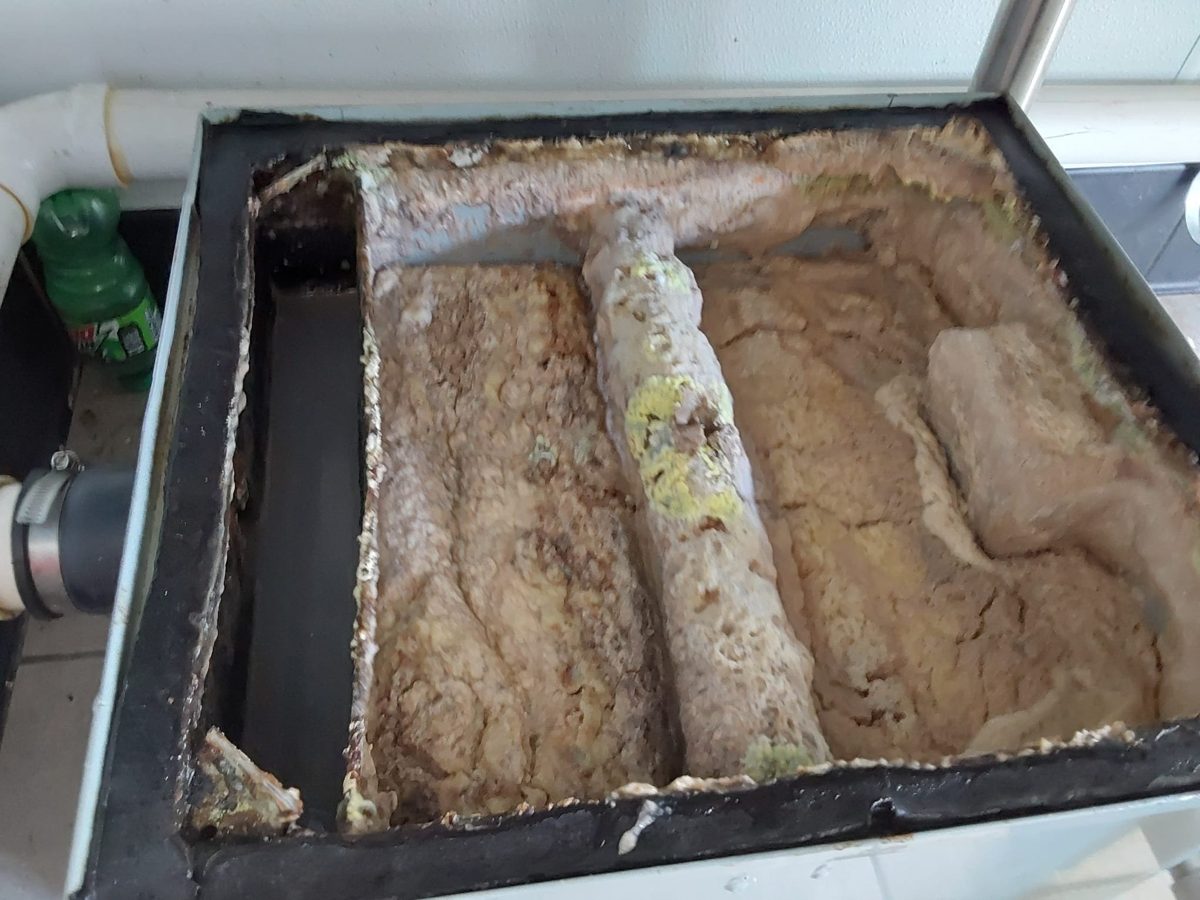
Small under-sink grease trap opened up and full of grease before pumping, in Oxford

A backup the day after a pump-out

Oxford · Grease trap

A business in Oxford had its small under-sink grease trap pumped and cleaned, and asked to stay on a schedule every three months. The next day it called back: the trap was backing up.

A backup right after a pump-out is confusing, because the trap is empty. The trouble is often in the line instead.

Our technician opened the inside and outside traps and found no concern with either. What was there was a belly, a low sag in the pipe just before the outside trap, where grease and water sit instead of flowing on. We jetted the line, ran the camera through it, and then ran the sink for 20 minutes with no trouble.

The business stayed on its schedule, and the record shows no more backups on the grease line: the visits that followed were planned pump-outs.
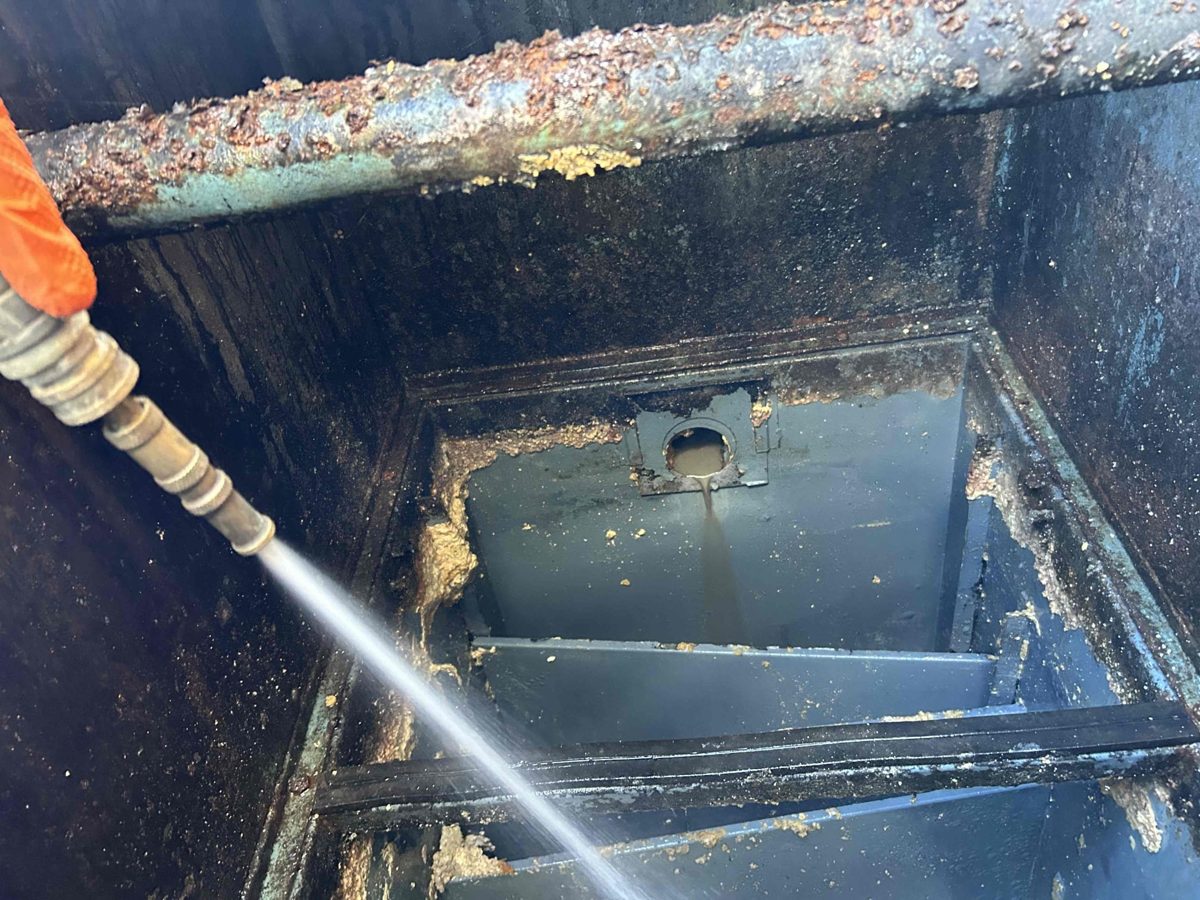
Washing down the inside of an in-ground grease trap after pumping, at a school in Oxford

Five locations, four grease traps

Oxford · Grease trap

We were called to pump five grease traps for the schools in Oxford, with someone from the schools meeting our crew to show us where each one was.

The tricky part of a job like this is that no two traps are alike. These ran from a 200 gallon trap with four compartments, to a 250 gallon single compartment trap, to two 1,000 gallon traps with two compartments each. Each one has to be found, opened, pumped and cleaned on its own terms.

And one of the five was not a grease trap at all. When our technician opened it, the fifth location turned out to be an ordinary manhole.

All four traps were pumped and cleaned on that visit, and the schools were billed for four pump-outs, not five.

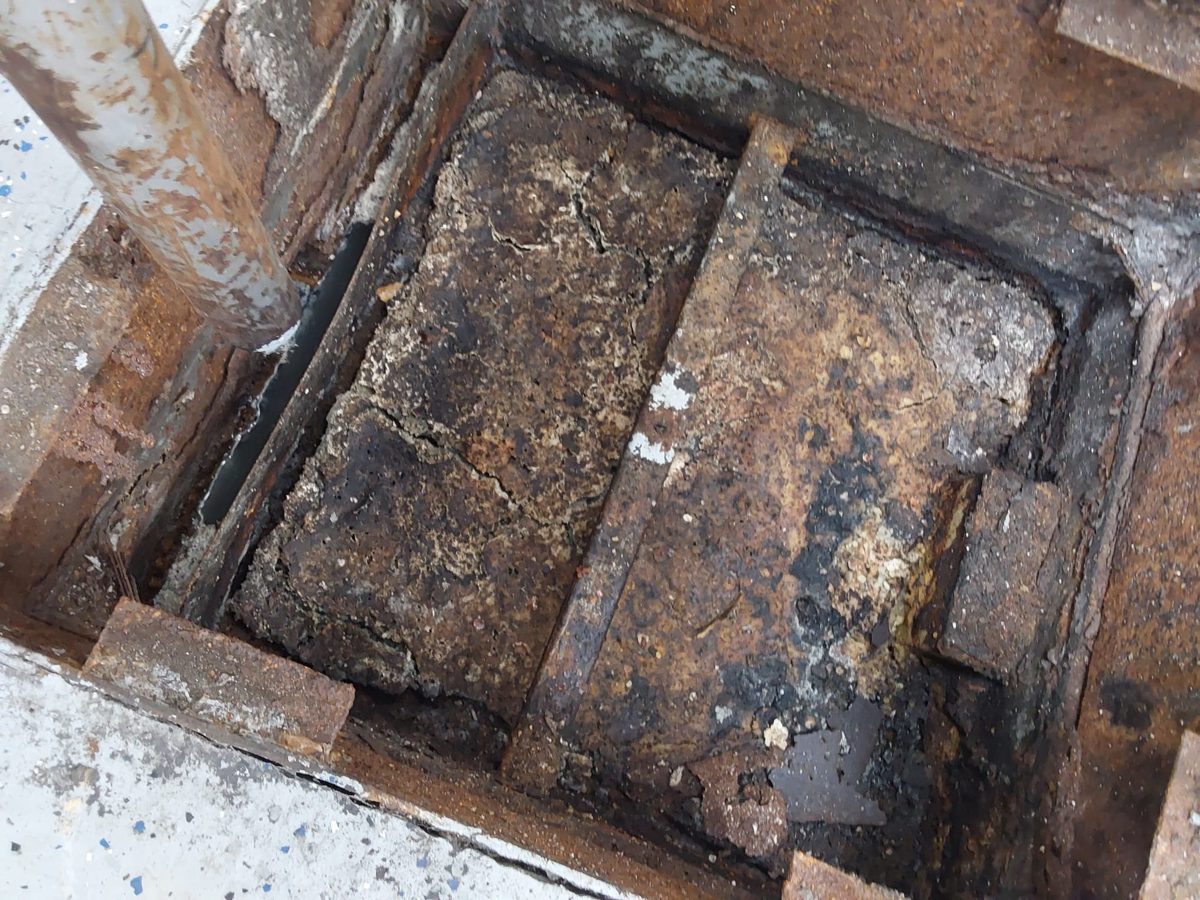
Grease trap opened up with a thick crust of grease across the top, before pumping, in Oxford

A grease plug past the trap

Oxford · Grease trap

A business in Oxford called because its grease trap needed pumping and a drain line needed clearing.

Getting to the trap was the first challenge: its lid was wedged under a sink and a stand-up dishwasher, and had to be worked free before anything could be pumped. Inside, grease had built up across the trap's outlet, blocking the way out.

We pumped the trap and cleared the outlet. Then our technician put the vacuum hose on the floor drain and covered the other openings so it would pull. After about 30 seconds, a big chunk of grease came out of the line, then the water standing behind it.

A camera run as far as it would go, five to six feet, showed nothing else in the line, and water ran down the drain for five minutes with no trouble.

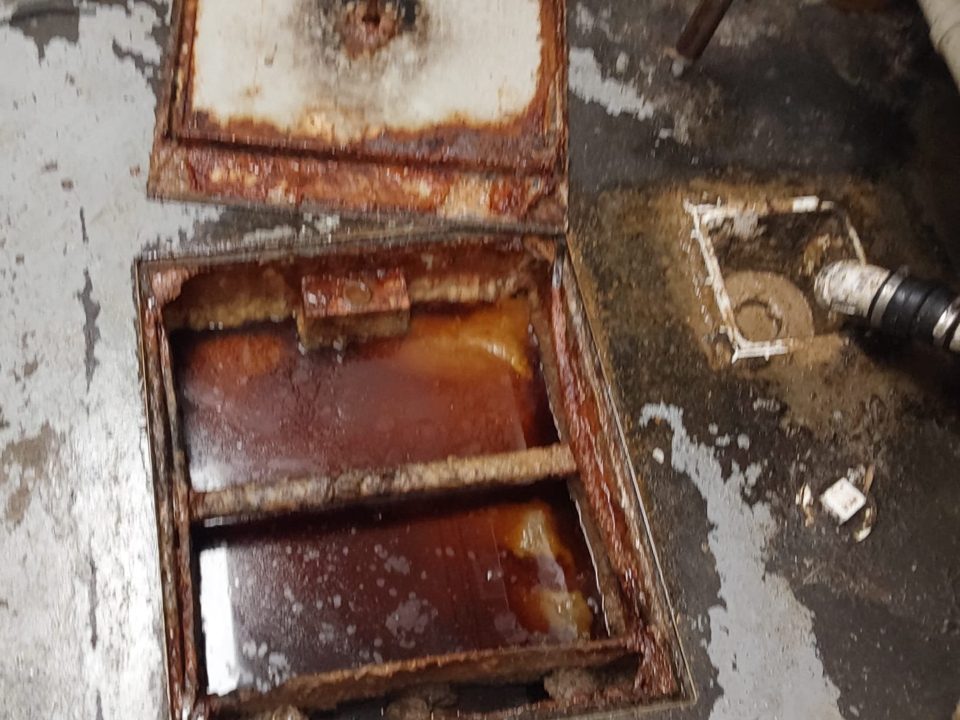
In-floor grease trap in a kitchen with the lid off, opened for pumping, in Oxford

Fries in the drain

Oxford · Grease trap

A kitchen in Oxford called for an emergency grease trap pump-out.

Grease was only part of it. A grease trap is built to catch grease, which floats. Solid food sinks to the bottom instead, and it piles up until it blocks the way out. At this kitchen, our technician noted the cause: lots of french fries blocking the drain.

We pumped the trap clean, which cleared out the fries along with the grease.

The emergency was the last one in the record. The visits since have been ordinary pump-outs, four of them over the next year and a half, with no more emergency calls.

If it's not this

Frequently Asked Questions

How often should a restaurant grease trap be pumped?

Usually every one to three months, depending on the size of the trap and how much the kitchen cooks. Many of our customers are on a schedule every three months. We can adjust it once we see how full the trap gets.

Why is my kitchen backing up right after the grease trap was pumped?

That usually points past the trap, to the line. On one job in Oxford we found a belly in the pipe just before the outside trap, then jetted the line and checked it with the camera.

Can you pump a small grease trap under a sink?

Yes. Small traps under a sink or on an upper floor are cleaned out with a large shop vac instead of the truck hose.

Why does my grease trap smell?

A trap that is full or close to full often smells. If the smell is in the building and not at the trap, see Something smells in my house.

Do you pump grease traps outside Oxford?

Yes. We pump grease traps across North Mississippi, including Tupelo, New Albany, Pontotoc and Okolona. Call 662-362-7745.

Contact Us

SMS Service Consent
SMS Marketing Consent

Talk to a real person, 24/7

Call 662-362-7745 or send the form. Every job starts with a guaranteed proposal before any work begins.