Commercial Wastewater Inspection and Facility Checks

  • Same-Day Service
  • Open 24/7
  • No Credit Card Fees
  • Voted Oxford's 2026 Best Plumbers, Heating & Air, Contractors & Biz Owner
Happy Pipes Mascot with Best of Oxford

Someone has to walk the system before it fails

A business that is not on city sewer still has to treat what goes down its drains. Usually that means a large septic system, a small treatment plant, a lagoon or a lift station sitting out back where nobody looks at it until something backs up, smells or sets off an alarm.

A commercial wastewater inspection is a scheduled visit where we walk that system, check that the pumps and tanks are doing their job, and catch the leak, the sludge or the broken fitting while it is still a small repair. We run these checks on a routine schedule across North Mississippi, from Tupelo and New Albany to Saltillo and Iuka.

Who usually needs a commercial wastewater inspection

Any property that treats its own wastewater instead of sending it to a city line. That often includes:

  • Stores, gas stations and restaurants outside city limits that run on their own septic system
  • Churches, offices and schools with a large tank, a field or an aerobic plant
  • Neighborhoods and developments served by a small package treatment plant or a lagoon
  • Any site with a lift station pumping wastewater uphill to a tank, a plant or a sewer main

If you are not sure what your property has, that is a fine place to start. We will find it, open it and tell you what it is.

What the visit looks like

A routine check is mostly walking and looking, with a few measurements. Our technician walks the whole facility and the fence line, opens what can be opened, and checks that every pump is running as it should. On a lagoon, that includes walking the levee.

Each check is logged with notes and photos. When something needs a part, such as a grate or a lid for an open chamber, the technician measures it on that visit so the part can be ordered. When something needs a repair, you get a guaranteed proposal before the work begins.

What we check

  • Pumps and floats: running, cycling and switching the way they should
  • Lift stations: the pumps, the alarm, and grease or debris building up in the station
  • Tanks, clarifiers and chlorine contact chambers: sludge building up where it should not be
  • Chlorine and dechlorination: the tablet feeder and the chambers it feeds
  • Risers, pipes, fittings and filters: leaks, cracks and anything spraying or running down the side of a tank
  • Lids, grates and fences: anything open, broken or down, including trees on the fence
  • Influent and outfall pipes: anything blocking them, from debris to wildlife
  • Backup equipment: the fuel level on a diesel transfer pump

How often

That depends on the system. The treatment facilities we check now are on a weekly or every two weeks schedule. A business on a large septic system often needs far less: a check and a pump-out on a schedule set by how fast the tank fills.

We will set a schedule with you after the first visit, once we have seen the system and how hard it works.

Facility checks we've run in North Mississippi

Real jobs from our own records. Towns only; no names or addresses.

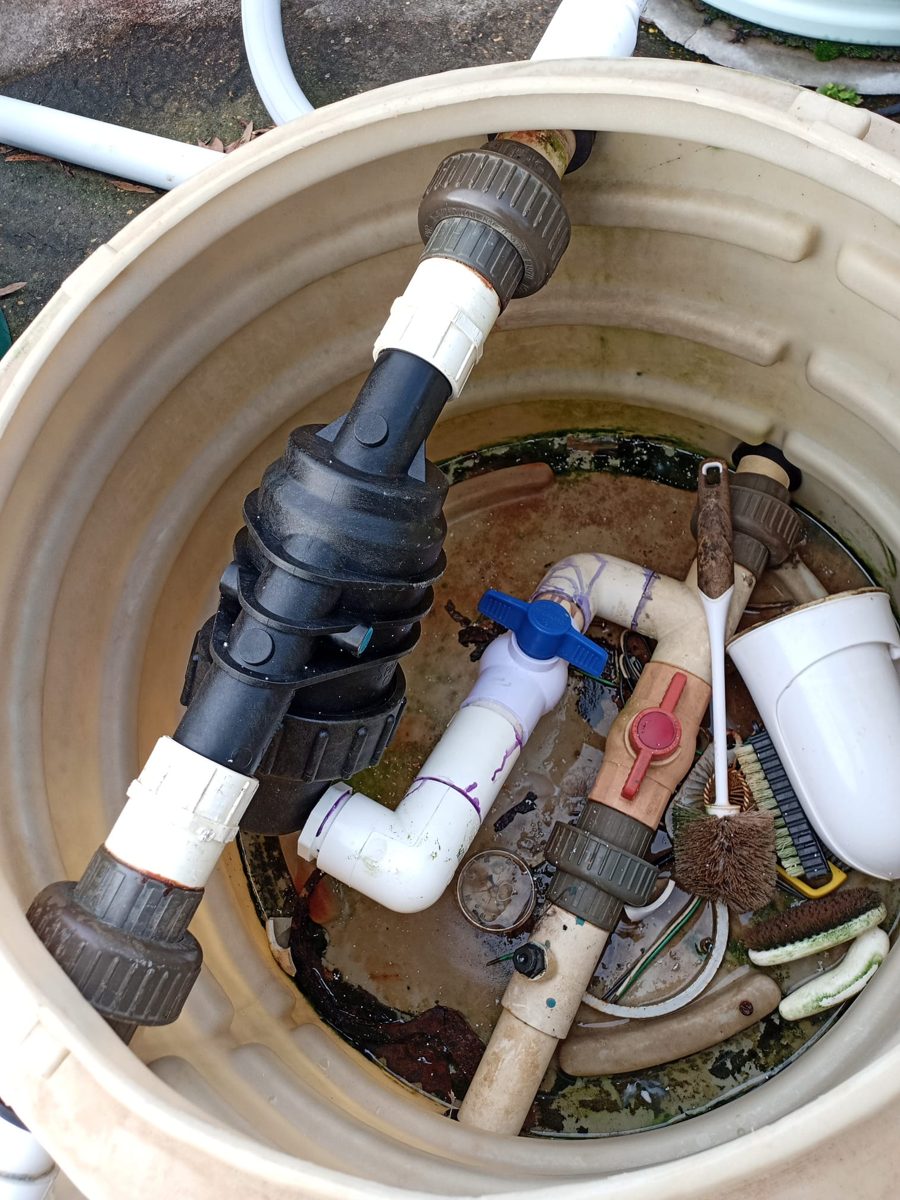
Filter, ball valves and fittings inside an opened riser at a treatment site, from the repair visit in Saltillo

Water spraying from a riser

Saltillo · Wastewater

On a routine weekly check at a treatment site in Saltillo, the pumps were running as they should, but water was spraying out of one of the risers.

A leak like that is tricky because the riser hides the plumbing inside it, and one break can mask another. Our technician opened it and found a 90 degree fitting had blown apart. After that repair, a pressure test showed a second leak: the filter itself leaked badly once the pumps pushed water through it.

The filter needed replacing, so we ordered a new one. On the return visit two days later we replaced the leaking filter, the ball valve and the other broken fittings.

The new filter was working and no longer leaking, and the site went back to its routine weekly checks.
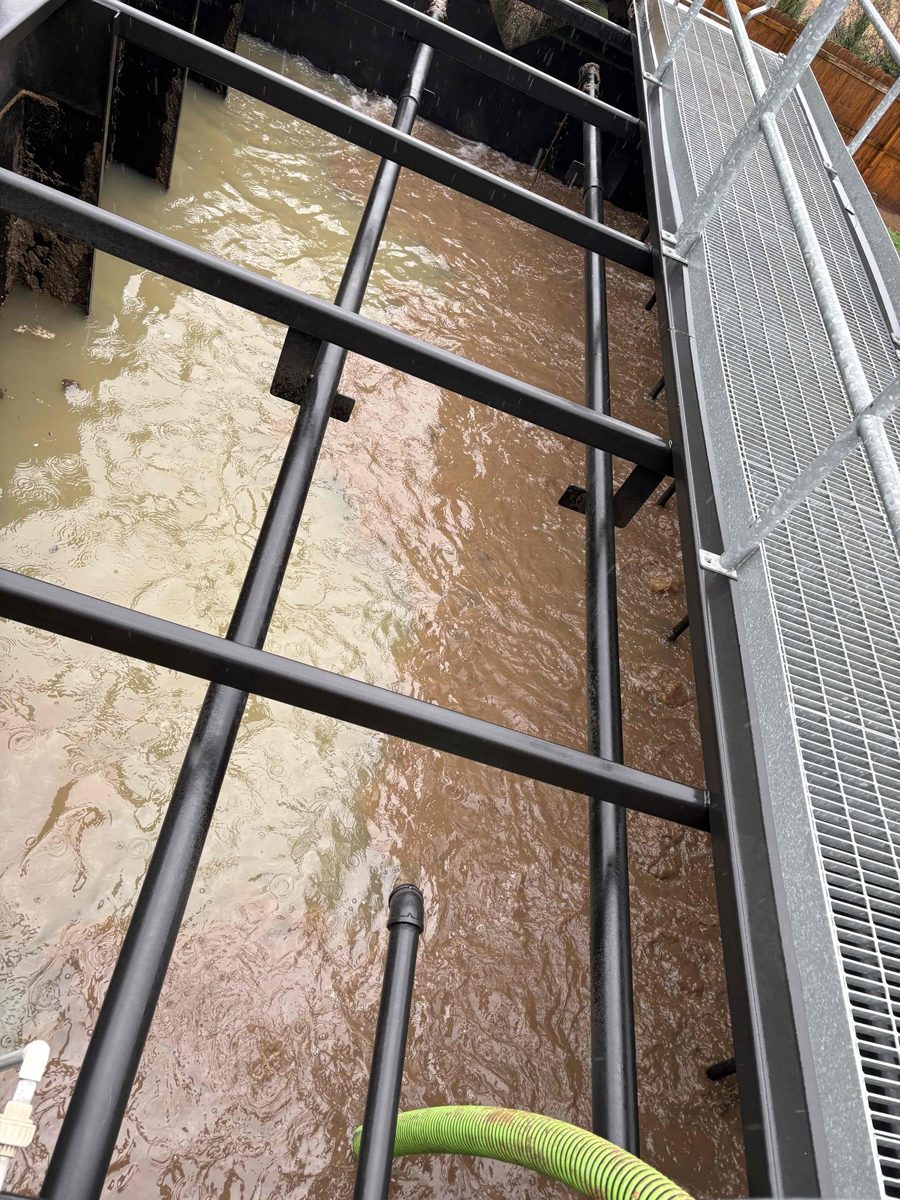
Open chamber of a package treatment plant during a full pump-out, with the suction hose in place, in New Albany

Seven truckloads from one package plant

New Albany · Wastewater

On a site check at a package treatment plant in New Albany, our technician found grease built up in the lift station and heavy sludge on top of the plant's aeration section.

The tricky part is volume. A plant like this makes sludge every day it runs. On a pumping visit in January, the first two chambers held so much foam and sludge, and the lift station so much grease, that the truck was full before the work was done.

We came back to finish. Our technician cut the limbs back off the fence and gate, then checked the lift station and the contact chamber: both looked good, far better than when they were pumped.

The next week we pumped the whole plant front to back, seven truckloads in one day, and the site went back to its routine checks.

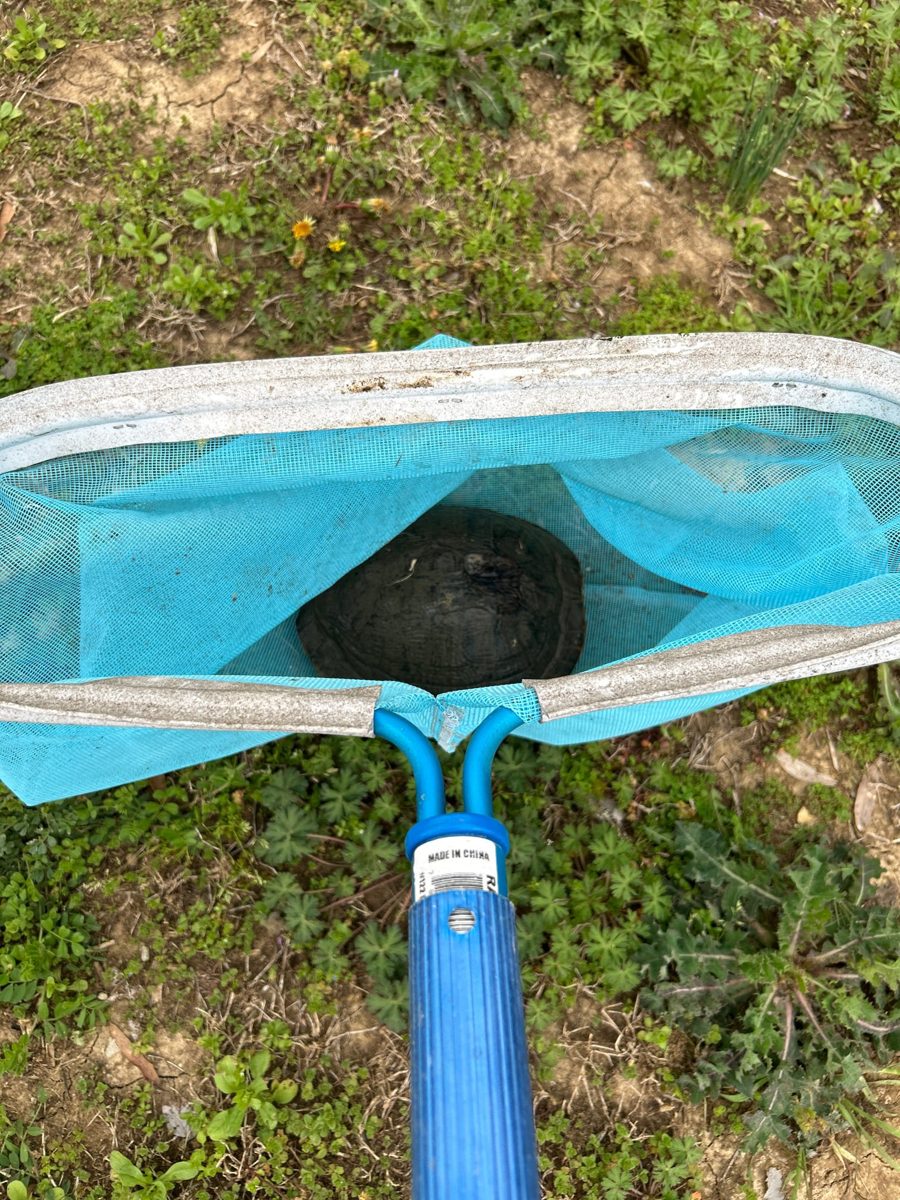
A turtle in a pool net after being pulled from the spillway at a wastewater lagoon in Tupelo

Turtles in the influent pipe

Tupelo · Wastewater

Routine checks at this lagoon in Tupelo cover more than the equipment. Our technician walks the levee and the fence line too, because an open lagoon sits close to the woods, and the woods find their way in.

Our first look at the site found a tree fallen on the fence beside the entrance gate, and we came back and removed it.

In March, a weekly check found something new: turtles had gotten into the influent pipe, the pipe that carries wastewater into the lagoon, and were trapped there. Anything lodged in that pipe can slow the flow coming in, so it could not wait for the next routine check.

Two days later our technician went back and removed the turtle from the spillway that feeds the influent pipe, and the site went back to its routine weekly checks.

If it's not this

Frequently Asked Questions

What is a commercial wastewater inspection?

A scheduled visit where a technician walks a business's wastewater system, checks the pumps, tanks, chambers and pipes, and logs what needs attention. It catches leaks, sludge buildup and broken parts before they turn into a backup.

Do you inspect small treatment plants and lagoons?

Yes. Most of our routine facility checks are on package treatment plants, lagoons and the lift stations that feed them, in places like Tupelo, New Albany, Saltillo and Iuka.

How often should a commercial system be checked?

It depends on the system. The treatment facilities we check now are on a weekly or every two weeks schedule. A business on a large septic tank usually needs much less. We set the schedule with you after we have seen the system.

What happens when you find something during a check?

Small things are often handled on the spot. For anything bigger, we measure for parts, take photos and give you a guaranteed proposal before the repair begins.

Do you work outside Oxford?

Yes. We run commercial wastewater checks across North Mississippi. Call 662-362-7745 and tell us where the property is.

Contact Us

SMS Service Consent
SMS Marketing Consent

Talk to a real person, 24/7

Call 662-362-7745 or send the form. Every job starts with a guaranteed proposal before any work begins.