Lift Station and Grinder Pump Service

  • Same-Day Service
  • Open 24/7
  • No Credit Card Fees
  • Voted Oxford's 2026 Best Plumbers, Heating & Air, Contractors & Biz Owner
Happy Pipes Mascot with Best of Oxford

What it usually is

If your house sits below the sewer main or its septic system, a lift station (or grinder station) does the pushing: a basin in the yard with a pump, a stack of floats that tell it when to run, a control panel, a check valve and an alarm. A grinder pump also chops up solids so it can push sewage through a small pressure line.

When the red light comes on or the buzzer goes off, it usually means the water in the basin has risen past where the pump should already have run. Most often that is a tripped breaker, a float hung up or coated in grease, or a pump that has quit. We service stations at homes and businesses, from a single float to a full station.

Signs your station needs a visit

  • The red alarm light is on, or the alarm is buzzing.
  • Toilets gurgle, or water backs up in the lowest drain or shower in the house.
  • The pump only runs when you switch it on by hand.
  • The pump runs and runs, even when the basin should be empty.
  • The pump hums but the level in the basin does not drop.
  • Bubbles or a wet spot in the yard near the basin or along the discharge line when the pump kicks on.

If the alarm is going off right now

Cut back on water right away: no laundry, no dishwasher, short showers. Once the alarm is on, the basin usually has hours, not days.

Check the pump breaker. The pump and alarm are on separate circuits on purpose, so a live alarm with a silent pump often means a tripped breaker or GFCI, especially after a storm. If it trips again, leave it off and call us. Please do not unplug the alarm, and do not open or lean over the basin: sewer gas collects there.

How we track it down

Everything is done from the top, with a hook or pole for the floats. Nobody climbs into a basin. We start with power: the breaker, the GFCI and the switch at the panel. Then we run the pump by hand, check the voltage, and lift the floats to watch the pump start and stop.

While it runs, we clamp the amps and compare them with the pump nameplate; high amps usually mean a laboring pump. A pump that runs without lowering the basin points to an air lock, a failed check valve or a blocked discharge line. A pump that keeps running with the switch off is urgent, because it can run itself to burnout. You get a guaranteed proposal before any repair begins.

What the work involves

Many visits end with a cleaning: grease and wipes foul floats more often than floats break. Other common repairs are a float, a start capacitor, a check valve, a control panel, guide rails, or a riser and lid so the station can be reached without digging. A residential sewage pump often lasts roughly 7 to 10 years, less on a grinder in a busy household, so age and the amp reading help decide between repair and replacement.

We also install new pumps and complete stations. On a commercial station, or anywhere a backup would be serious, we talk through a duplex station: two pumps that take turns, so one can fail and the other keeps up.

Station calls we've run in North Mississippi

Real jobs from our own records. Towns only; no names or addresses.

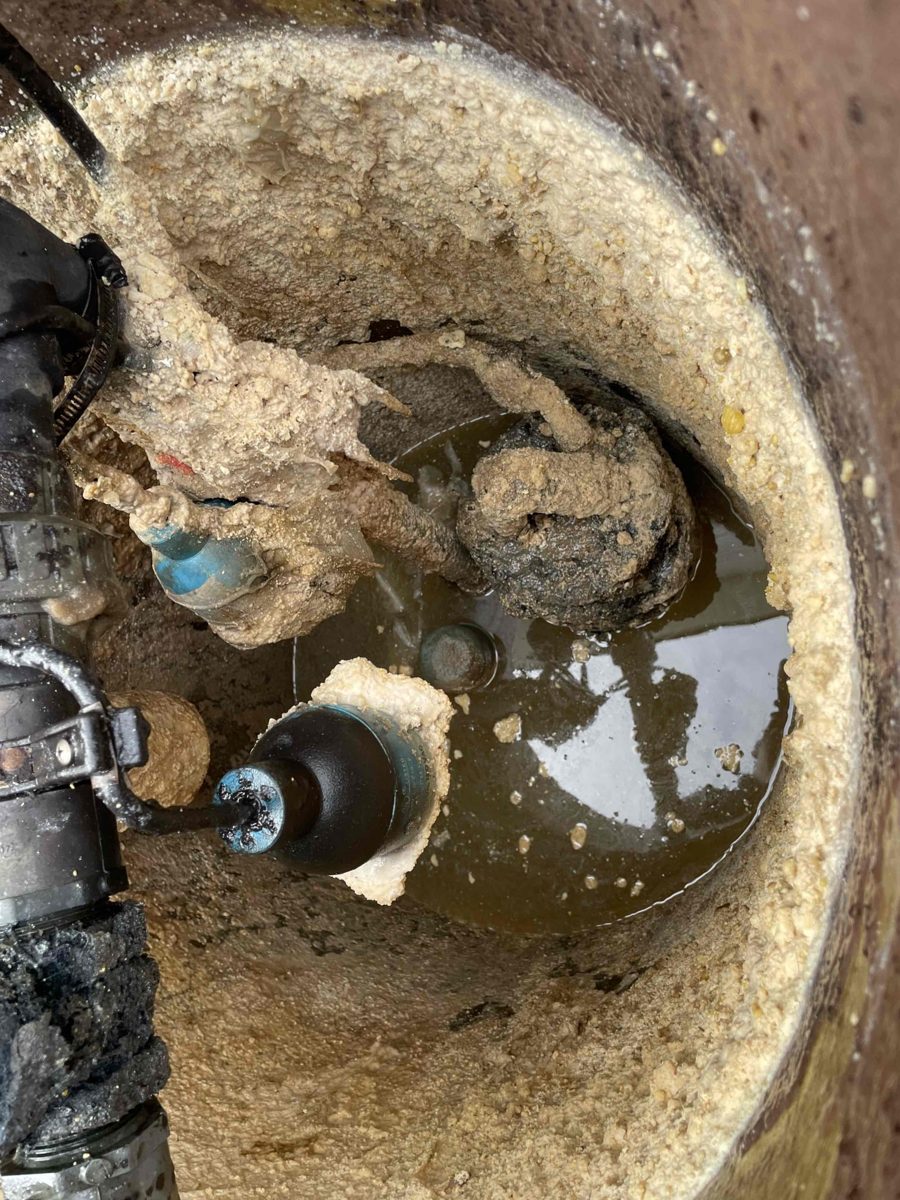
Grinder basin coated in grease, with the floats caught in it, in Iuka

An alarm, and floats stuck in grease

Iuka · Lift station

A lift station in Iuka was alarming. Our technician checked the pump first, and it was drawing the right amps and voltage.

That is what made it tricky. When the pump itself is healthy but the alarm keeps sounding, the trouble is usually in the floats, the switches that tell the pump when to start and stop. They hang down in the basin, under a lid that here had to be dug up.

Once the basin was open, the cause was plain: it was full of grease, and the floats were hung in it. A float stuck in grease cannot rise and fall with the water.

He washed the station down, cleaned the floats off and checked the panel components. Then he tested the station on automatic five times before calling it done.
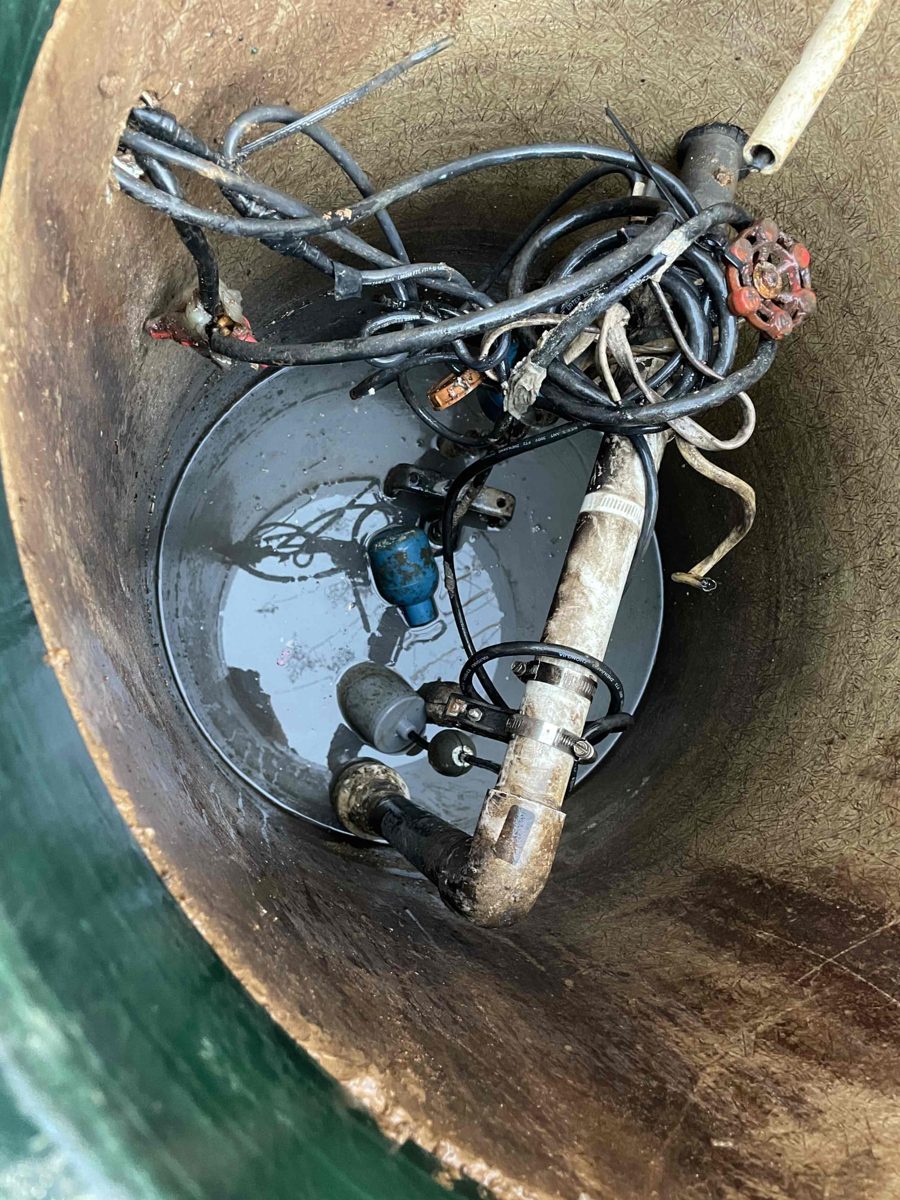
Looking down into a grinder basin at the pump, floats and wiring, in Iuka

A grinder station put right in three visits

Iuka · Lift station

A homeowner in Iuka was running her grinder pump by hand after every shower. Someone had already changed the floats, and it still would not turn on and off by itself.

New floats that still do not work usually point somewhere else. Our technician found the control panel was shot, wired the pump to get her by, then came back with a new panel and one new float.

The next day the alarm sounded. The stop float had ridden up onto the pump and hung there by its wire. We moved the floats away from the pump, adjusted them, and added a 6 inch riser and a new lid.

A week later it got noisy. We pulled the pump, cleared it of rags and repaired the discharge plumbing. That visit finished it: the station has not needed a call since.

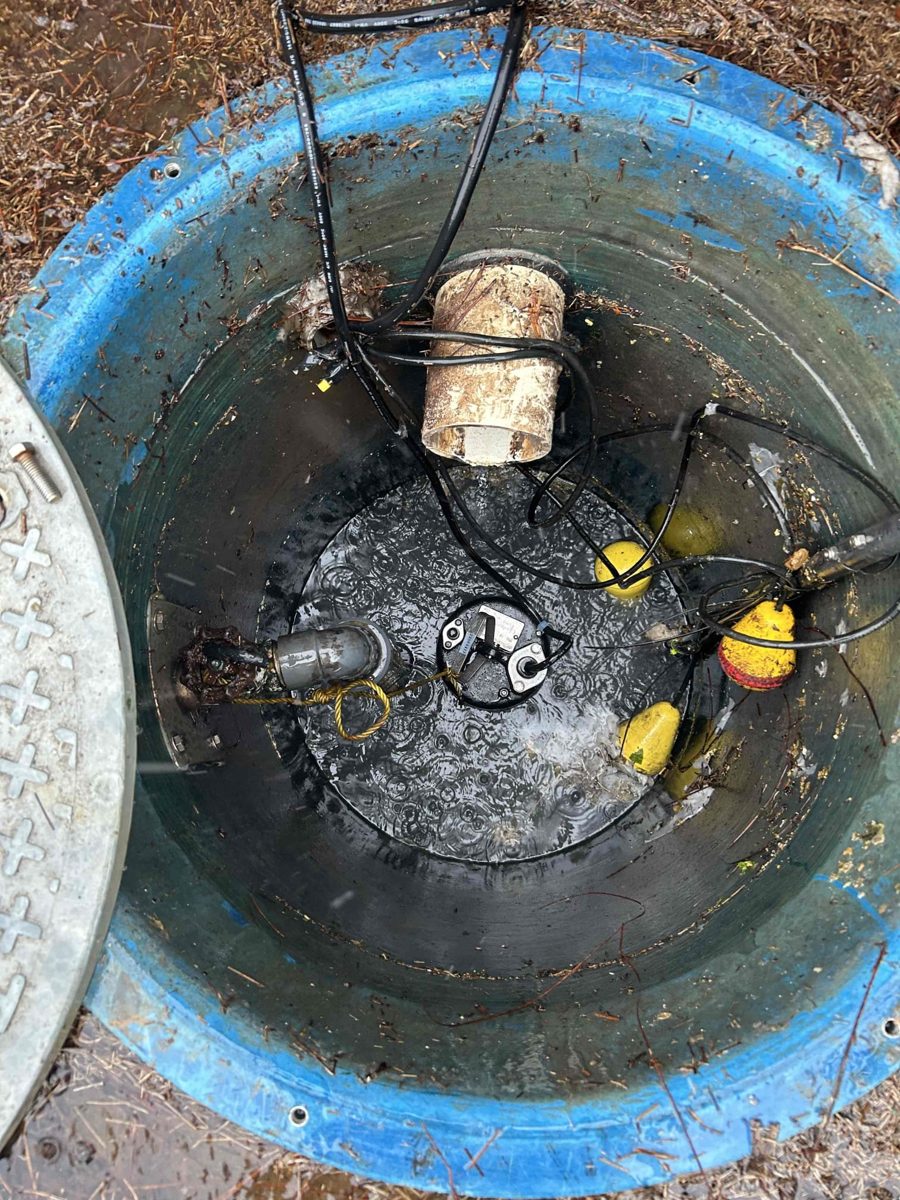
Grinder basin with the pump and yellow floats, in Oxford

Panel light on and the basin overflowing

Oxford · Grinder pump

A grinder station in Oxford had its panel light on and the basin overflowing. When our technician arrived, the pump was not running.

A pump that will not start can have more than one cause, and that is what makes it tricky. A failed start capacitor, the part that gives the motor its kick at startup, often looks just like a dead pump.

He checked the amps, tested the start capacitor, found it was not working and replaced it. With a good capacitor in, the pump still was not right: the pump itself had failed.

So the same visit ended with the old pump out and a new 2 horsepower grinder pump, with new start capacitors, installed in its place.

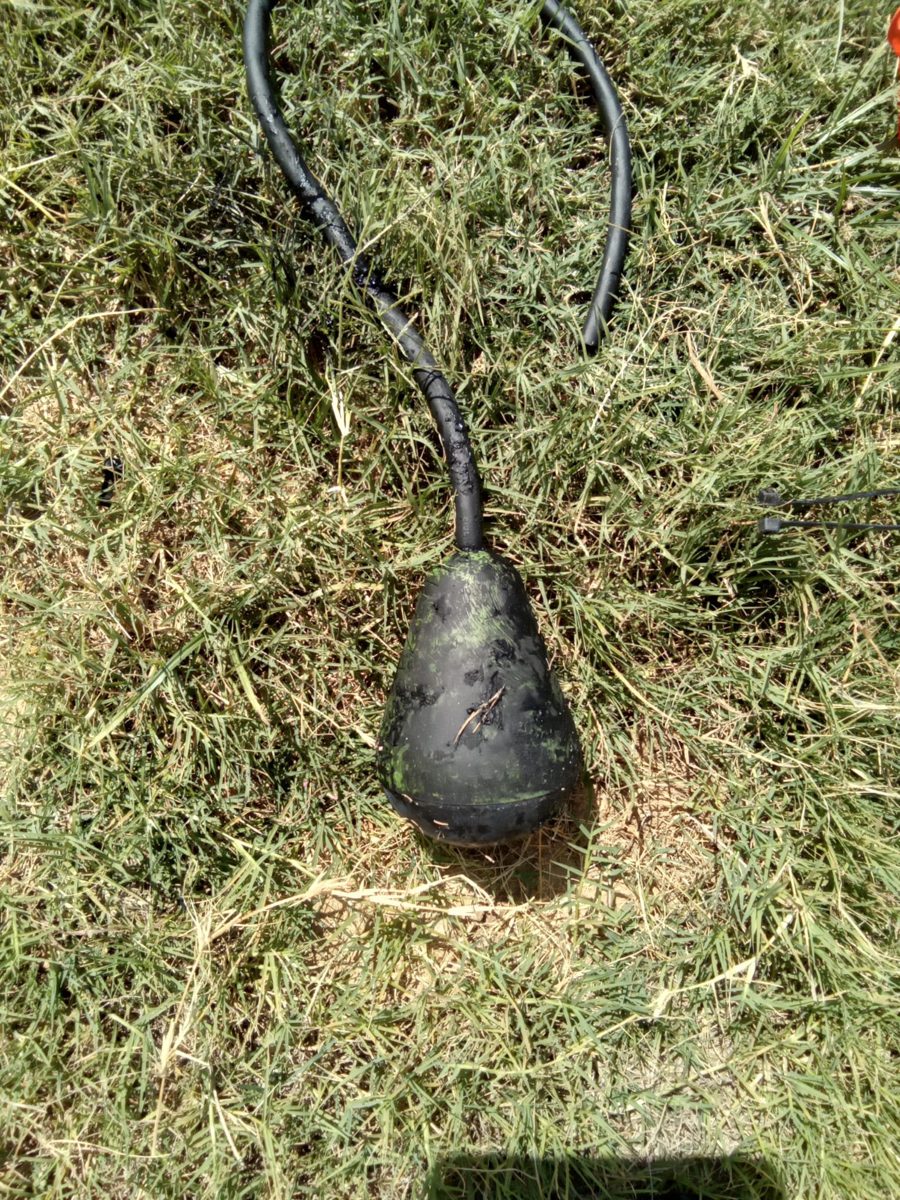
A control float for a facility lift station, in Blue Springs

A facility pump that only ran by hand

Blue Springs · Commercial lift station

At a facility in Blue Springs, not a home, the grinder pump would only run when someone turned it on by hand.

A pump that runs by hand but not on its own is usually healthy. What has failed is whatever should be telling it when to run, and on a station that is usually one of the floats or the control panel. Finding which one is the tricky part.

Our technician checked the station and panel and traced it to a bad off float, the one that tells the pump when to stop. He replaced it.

With the new float in, everything ran as it should, and the station went back to running on automatic instead of waiting for someone to switch it on.

If it's not this

Frequently Asked Questions

My grinder pump alarm is going off. Can I still flush?

Use as little water as you can until we get there. The alarm usually means the basin is already above where the pump should have run, so every flush and load of laundry fills it closer to a backup.

Can I just turn the alarm off?

You can silence the buzzer, but the alarm is telling you the pump has not done its job. Silencing it is not a fix. Check the pump breaker, cut back on water, and call us.

What is the difference between a lift station and a grinder pump?

Both pump sewage uphill or a long way. A grinder pump chops solids first so it can use a small pressure line. Our technician tells which one you have, so you do not need to know before you call.

Do you work on commercial lift stations?

Yes. We service and install stations for businesses and facilities, including duplex stations with two pumps, and we offer routine checks. See commercial wastewater inspection.

Contact Us

SMS Service Consent
SMS Marketing Consent

Talk to a real person, 24/7

Call 662-362-7745 or send the form. Every job starts with a guaranteed proposal before any work begins.